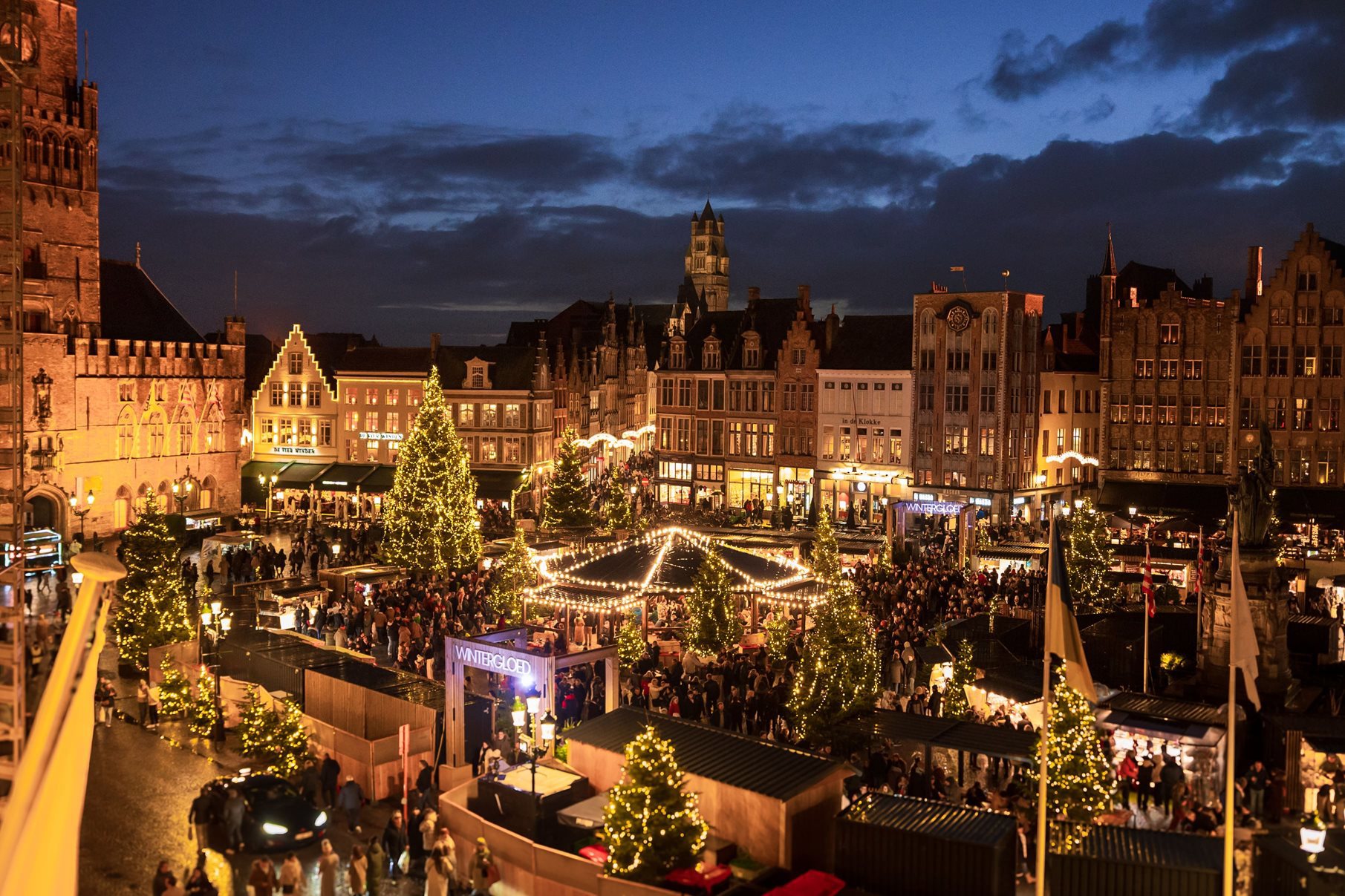
Enjoy the ultimate mini break and see some of Europe’s most famous landmarks at Mini-Europe in Belgium. From the Eiffel Tower to Big Ben, visiting this incredible miniature theme park is a wonderful family-friendly activity to do while in Brussels.
Why visit Mini-Europe in Brussels?
Everyone loves a model village, but Mini-Europe is so much more. It is a model continent. Landmarks of 80 cities in Europe are reproduced at 1:25 scale, celebrating Europe’s history, culture and traditions. The detail is astonishing – intricately made depictions of some of Europe’s greatest buildings and landscapes, with moving elements, animations and interactivity throughout. It will inspire, delight and educate in equal measure.
Is Mini-Europe worth it for families with children?
Mini-Europe is definitely worth a visit for families with children! The attraction in the Belgian capital may focus on tiny landmarks and miniature scenes, but it is BIG on entertainment and learning.
Highlights for families include:
- Kid-friendly size: You can easily fit Mini-Europe into a 2-hour visit - making it perfect for little legs.
- Interactive fun: The attraction has plenty of hand-on exhibits, buttons, levers and mini activities to explore.
- Educational exhibits: Learn about Europe, it’s history and top landmarks.
- Close to other attractions: Mini-Europe is close to other family-friendly attractions like the Atomium, the Institute of Natural Sciences and the LEGO Discovery Centre.
Top things to see and do at Mini-Europe
For children who have not yet seen the cities in real life, Mini-Europe can be a real inspiration to travel. Even for older visitors, horizons can be widened or fond memories jogged.
Explore miniature monuments
Mini Europe features reproductions of 350 different monuments, including the Doges Palace in Venice, the Berlin Wall and the Brandenburg Gate, the Acropolis in Athens, Madrid’s Escorial Palace, the Arc de Triomphe, Leaning Tower of Pisa, the Windmills of Kinderdijk and the cathedral of Santiago de Compostela. You will be amazed by the level of detail – such as the flower carpet and the gold leaf statues at the Grand Place in Brussels, and the intricacy of the decoration on many of the buildings.
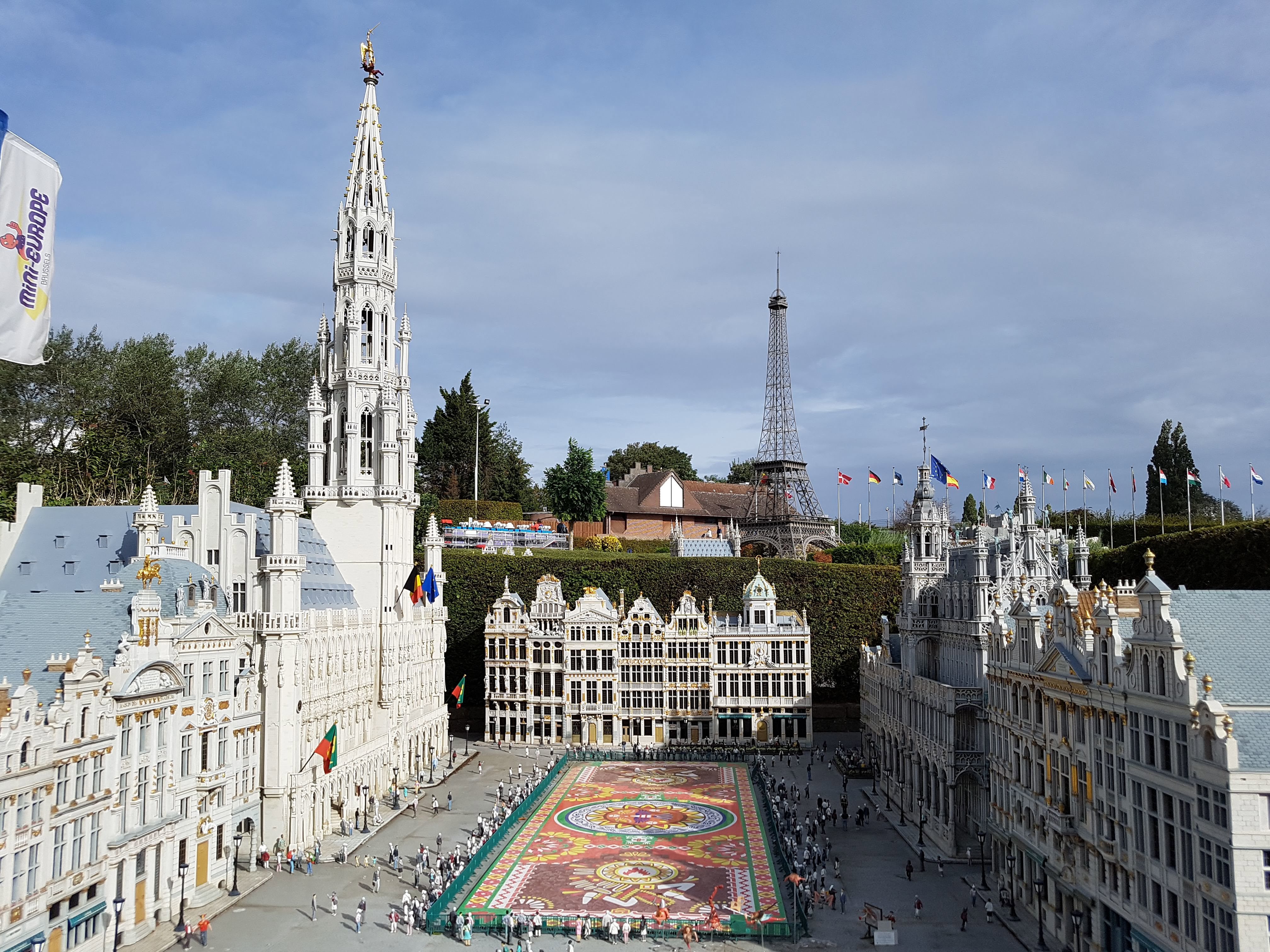 The miniature Grand Place, Brussels
(Credit: Netha Hussain, CC BY-SA 4.0, via Wikimedia Commons)
Immerse yourself in Europe’s history
Mini-Europe also recreates scenes from Europe’s history, such as a Viking village, depictions of ancient Greece and Rome, a medieval jousting match and the eruption of Mount Vesuvius. There are also illustrations of more recent events, such as Brexit demonstrations in London; a scene featuring climate campaigner Greta Thunberg, and a demonstration by the Catalan nationalist movement. You will also see a real piece of the Berlin Wall.
Get hands on with interactive displays
There is the chance to bring these models alive! Some of the monuments feature interactive elements. You can activate a bulldozer as it destroys a piece of the Berlin Wall, start an eruption of Vesuvius, launch the Ariane space rocket or set the bull free in the Seville bullfighting arena, watched by 6,000 miniature people in the stands. These aren’t meant to be static displays – model trains, cars and lorries chug by, as if daily life is being lived in these miniature cities.
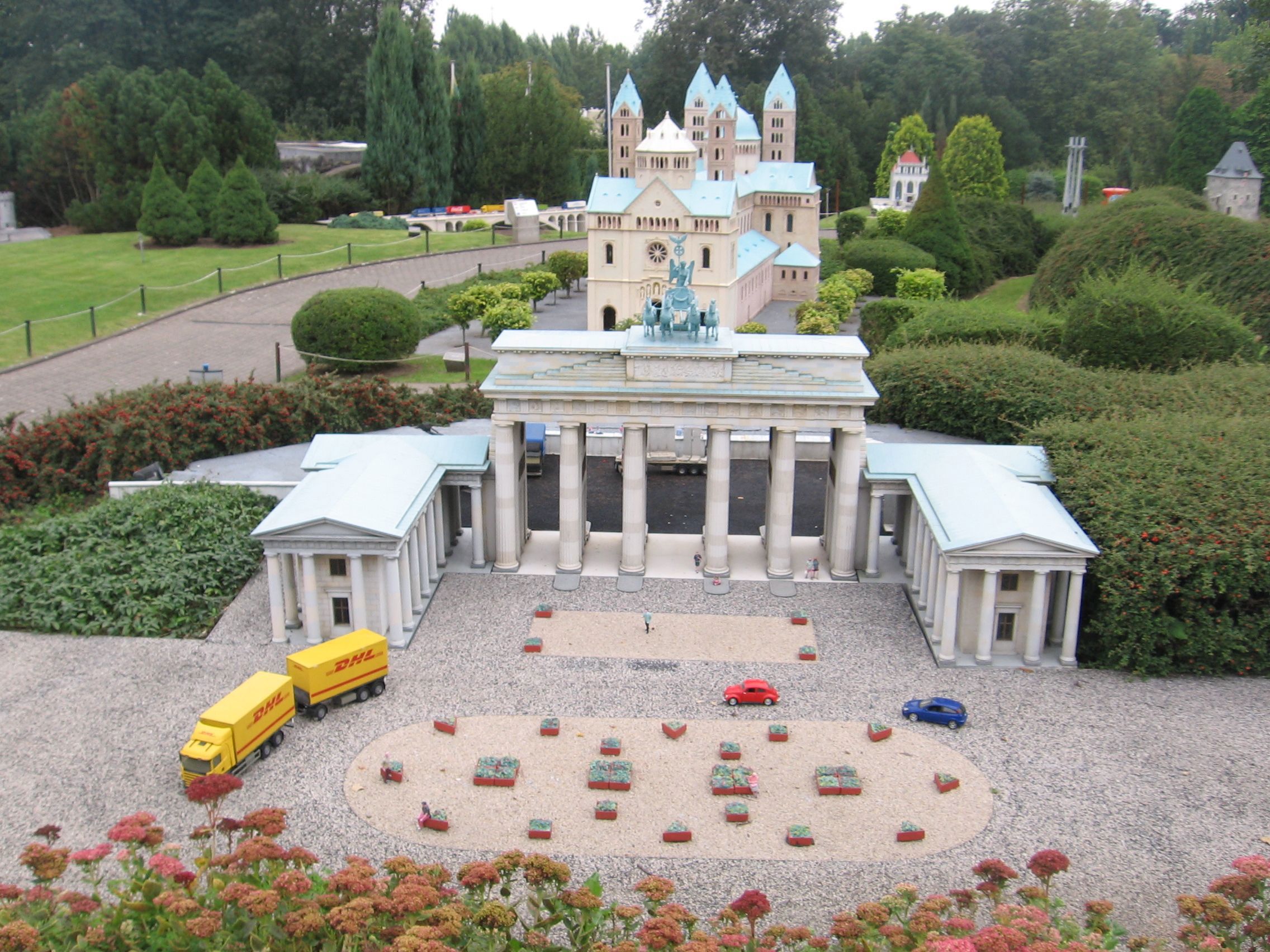 The miniature Brandenburg Gate, Berlin
(Credit: Gellerj, CC BY-SA 3.0, via Wikimedia Commons)
Stroll through beautiful gardens
The models are attractively set in gardens featuring 150 species of plants and flowers, usually with a link to the country in question. There is lavender from Provence in the French areas, grasses from Spain in the Spanish sections. Bonsai trees, mini fountains, waterfalls and streams help to create stunning landscapes, with pathways that are fully accessible for anyone with assistance needs.
Visit the Spirit of Europe exhibition
As well as to surprise and delight, there is an underlying message behind Mini-Europe – to show the strength of European co-operation, in the city that is home to the European Union. So models of all 27 EU member countries are featured, along with the UK, and the attraction includes ‘The Spirit of Europe’, an audio visual exhibition telling the story of the EU and its values.
Experience seasonal events and exhibits
Mini-Europe is no exception to the spooky spectacles and feel-good festivities that light up attractions across Europe for Halloween and Christmas.
During Halloween, expect to see skeletons, zombies, monsters and spiders creeping around the world’s landmarks. Along with a ghost train, a skeleton party and educational nods to the spookier side to Europe’s history.
At Christmas, the Belgian attraction becomes a winter wonderland. Across the park, you’ll find snow-capped scenes and tiny, tinsel-lined streets. Look out for Christmas markets and parades as well as festive figures like carol singers and snowball slingers!
Planning your visit to Mini-Europe theme park
Find all the essential information you need to plan your mini road trip across Europe.
Drive to Brussels from Calais
It takes only just over two hours to drive to Mini-Europe from the LeShuttle terminal at Calais.
If you have never driven in Belgium before, make sure you are aware of what you need in your car and the basic rules of the road.
It’s worth remembering that the city of Brussels is a Low Emission Zone. Head to the LEZ Brussels website to learn more about the zone’s boundaries, which vehicles are affected, and the access criteria. You can also buy a day pass if you drive a non-compliant vehicle.
If you are travelling by public transport from central Brussels, the nearest Metro station is Heysel.
What’s the easiest way to get to Mini-Europe if you’re driving?
The easiest way to get to Mini-Europe in Brussels, Belgium, is via the A16. Take the A16 from Calais towards Dunkirk, then the E40 via Bruges and Ghent. The Mini-Europe miniature theme park is located near to the Atomium, in the northern outskirts of Brussels.
 The UK still features prominently at Mini-Europe!
How much are Mini-Europe tickets?
Adult tickets for Mini-Europe cost around €20. There is also an option to buy a combined ticket for Mini-Europe and the Atomium, with both attractions next to each other. Many people do this. Tickets can be booked in advance online.
What are the opening hours and seasonal openings at Mini-Europe?
Mini-Europe is open from mid-March to the end of December and closes for the season between January and early March.
The attraction is usually open between 9:30am and 6pm, although exact opening hours vary depending on the season.
We recommend checking the Mini-Europe website before visiting to check the exact opening hours at the time of your trip.
How long does a visit to Mini-Europe take?
You should allow around 1½ - 2 hours to walk fully round Mini-Europe, as well as the Spirit of Europe exhibition.
Do you need to book Mini-Europe?
No, you can buy tickets at the entrance on the day, but these are more expensive than booking in advance online.
Is Mini-Europe included in the Brussels Card?
The Brussels Card gives discounted entry to Mini-Europe, as well as free entrance to over 40 museums in the city for 24, 48 or 72 hours.
Where can I park when I visit Mini-Europe?
There are two car parking areas, Parking T and Parking B, both coasting €12 per day. You can park there when visiting both Mini-Europe and the Atomium.
Can you visit the Atomium and Mini-Europe on the same day?
Yes, you can visit Atomium and Mini-Europe on the same day. The attractions are beside each other and offer combination tickets to make visiting both more budget-friendly. You’ll only need around two hours per attraction, so it’s easy to fit both into the same day. Why not make a day trip of it?
Must-see attractions near Mini-Europe
 The full size, real life Atomium, next door to Mini-Europe
(Credit: o palsson, CC BY 2.0, via Wikimedia Commons)
You don’t have to go far from Mini-Europe to visit one of Brussels’ biggest attractions, the Atomium. In fact they are just a few steps walk from each other, and can be combined in the same ticket. The Atomium is 100 metres high and towers over the miniature attraction. It was originally built for the World’s Fair in 1958, to demonstrate the use of nuclear physics for the benefit of mankind, but became a permanent structure due to its popularity. Today you can scale its elevators, stairs and escalators to the 6 of its 9 spheres, and get incredible views of Brussels and the surrounding skyline.
You’re also not far from:
• Design Museum Brussels – exhibitions featuring notable examples of Belgian design
• Planetarium of the Royal Observatory of Belgium – see stunning films about the stars and the planets projected onto a 23m high dome
• René Magritte Museum – a fascinating collection of works by the famous surrealist artist, in his former home
Book with LeShuttle for the ultimate mini break through Europe!
It would take the road trip of a lifetime to visit all these cities in real life – but it only takes a couple of hours at Mini-Europe in Brussels. Get there in no time at all with the help of LeShuttle – a little journey of just 35 minutes between Folkestone and Calais.
Top image credit: Asif Masimov masimovasif.net, CC BY-SA 3.0, via Wikimedia Commons